
A: “We’re halfway through our lives, so the time to act is now!”
B: “You think we’re only going to reach 80? That’s young, no?”
A: “You’re missing the point. We’re not getting any younger. If there’s things we want, we must work on them now.”
This was poignant life advice for someone like me who overthinks; contemplates; weighs up choices; and stress-tests strategies before cautiously moving into action.
Yet, even if I was convinced I was being short-changed an entire decade, based on my grandparents’ strong legacies, did I really want to believe that spending the next phase of my life chasing a suitable story to reflect on during my final moments was a good use of time?
Even though I relish being in control, I don’t dare fall into a rabbit hole of delaying the inevitable besides keeping an active running schedule for body and mind. Now, this cavalier attitude could be influenced by my belief in a higher power or it could reflect new US scientific research that reveals death anxiety – a psychological fear associated with thinking about death – declines in midlife (only to reappear again after 65-years).
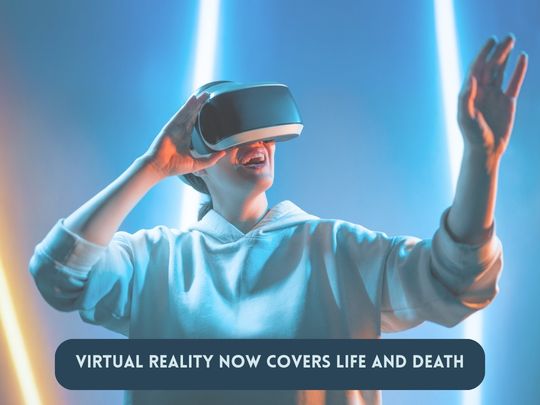
While a King’s College London study recently revealed that 47% of UK adults are worried that they or their loved ones will have a painful or undignified death, somewhat fuelled by concerns around the quality of palliative care available, US researchers are now using virtual reality to simulate near-death experiences in an attempt to reduce anxiety and depression. In fact, Texas A&M University reported a 75% decrease in fear after a single 12-minute session.
In a three-part virtual experience, a small sample of students enjoyed an out-of-body sensation; memory flashbacks; and a peaceful landscape, which some claimed to be relaxing, motivating and helpful for reframing.
That’s not difficult to believe, especially when it mirrors my last holiday.
It’s usual for clients to use therapy to help cope with loss or bereavement, as well as explore fears associated with death. And I can fully appreciate if someone experiences a psychological fear around death – still largely considered a taboo subject – that simulation can be helpful as part of technology-based behavioural response.
But, as a predominantly Person-centred counsellor, who fundamentally believes that clients have the innate potential to uncover answers to questions and access tools to resolve challenges, I’m less interested in gamifying concepts like death in favour of exploring existential themes between life and death. For example:
1. What does life mean to you?
2. What do you want in life?
3. What does living authentically look like?
4. How would you like to look back on your life?
5. Does fear of death reduce the quality of life?
Death has a bad reputation and, because we rarely create space to sit with it, we’re indirectly taught to fear it. If this resonates with you, I gently encourage you to release its grip ever so slightly by taking the opportunity to talk to a non-judgemental, trusted person, like a counsellor, who can explore these feelings with you.
Whether you’ve had your own near-death experience which has left an imprint, carry universal memories from the Covid-19 pandemic which strongly highlighted the fragility of life or are simply more aware of death following the introduction of the assisted dying bill, be assured there's no right or wrong way to manage our feelings.
However, for me, there are several factors that’ll undoubtedly influence my attitude towards death – including my age, my health, future caring responsibilities. But, voluntarily rehearsing it is not on my to-do list. Nor is over-worrying about the time I have left to the things I want to do. Because that would mean I buy into the idea that there's a way to live an ideal, perfect life that leads to a sweetly satisfying conclusion. Some individuals, known as longevity pioneers, are choosing to displace death entirely by stretching their life expectancy to its limits.
But, if your life is dedicated to avoiding death, are you really living? For me, there's a rustic beauty in looking at the mistakes I've made, learning from them and growing - regardless the length of the chapter that is to come. It's the quality of life that matters and it's the freedom of how we spend our time that enables us to truly become alive.
The Fountain Therapy Trust is a long-term affordable in-person and online counselling service for local people across New Malden, Kingston, Surbiton, Wimbledon and beyond. If you want one-to-one support to explore grief, loss, bereavement, anxiety or depression, get in touch to see how we can help.
Donna is an integrative counsellor running a small private practice, while supporting The Fountain Therapy Trust.