
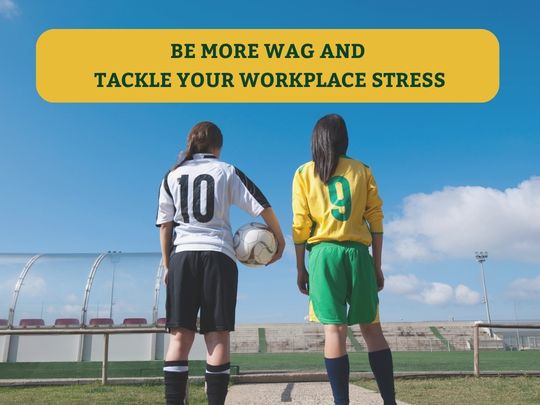
New research from Leeds Beckett University reveals that football clubs should offer WAGs (wives and girlfriends) counselling to help women cope with their experience of ‘taking a backseat’ for players, which has a detrimental impact on their identity and self-esteem.
It’s a very modest qualitative study. But, hot off the heels of the FIFA World Cup, therapists could soon see themselves busy with new clients, helping WAGs to unpick the pressure on and off the pitch.
Although many may view the WAG title as a lifestyle, opposed to a job, it does prompt the question as to which professions are most likely to rely on counselling support because of burnout, depression, anxiety and stress – with the healthcare; emergency services (police, firefighters, paramedics); education; and legal sector coming out on top.
For example, 31% of NHS staff reported feeling burnt out last year, and 56% attended work despite not feeling well enough to perform.
The high risk of emotional and mental health support is driven by the perceived weight of accountability on an individual – a continuous cycle of saving lives, preventing accidents, protecting others and fulfilling future potential. This tends to occur across long hours, often with limited sleep, where workers are required to make rapid decisions for large caseloads. That’s before we even start to acknowledge the potential exposure to trauma.
In essence, it’s the jobs that know no boundaries. Unpredictable, up late and on call.
But it’s not just front-line responders who are feeling the pressure. Work-related burnout currently affects nearly one in five people (19%), up from 16% in 2025, according to the British Association for Counselling and Psychotherapy’s 2026 Public Perceptions Survey.
Is this you?
Perhaps you’re feeling low on energy and finding it difficult to enjoy activities you once did outside of the office? Maybe you’ve caught yourself being overly critical or negative towards your job, and want to vent with those who share your experience? Or, you could be frustrated by the idea of putting the work in, only to find your outputs are less effective than usual due to limited concentration?
If you can relate to any of these signs – meaning you’re likely to be a committed, conscientious and compassionate colleague who needs support to put themselves first – counselling may be a good first step. In doing so, you’ll benefit from talking to a trained therapist who can objectively work with you to explore your experiences by:
- Understanding your professional reality – getting to know your profession as far as possible through your eyes and ensuring your responsibilities, and consequences, are never downplayed (going beyond the job description)
- Validating your experiences – recognising and respecting the feelings and fears brought into the session (rational and irrational)
- Acknowledging the reality gap – unpacking your desire to deliver consistent, high-quality work, and where organisational barriers make this difficult to achieve (how you’re working around challenges and the impact this has on your physical, mental and emotional energy)
- Normalising your responses – acknowledging and eliminating any shame in asking for help by understanding where this belief comes from and other areas it’s shown up in your life (re-framing vulnerability as strength)
With The Fountain Therapy Trust offering long-term, affordable in-person or online counselling, there’s ample time to do this without rushing. Because, if you’re driven to perform or are a self-declared perfectionist, we want to challenge any superhero status to help you feel more comfortable with humanity.
This is easier said than done – especially when others treat you as the workplace ‘oracle’.
As someone who balances a busy marketing role, I’m used to adopting different postures throughout the day. From answering questions, providing advice, pitching ideas and presenting updates, I have to be available across multiple channels all-day long.
The summer used to be universally accepted as a slower season in working life. But, with the threat of AI, coupled with the cost-of-living challenge, this no longer feels possible. Operating at full speed, all-year round, is the norm.
Sometimes by the end of the day, you’ve looked after so many people, you wonder where you’ll find the energy to tend to your basic needs. What’s for dinner? I don’t know. The question’s so overwhelming, I’ll just skip it.
Waiting for things to get better is one approach. But the best results occur when you schedule it into your plan.
Beginning counselling to cope with workplace stress and burnout may initially feel like an extra on your ‘to do’ list, but it’ll soon become the ‘do not disturb’ appointment you look forward to – building resilience for your next workplace challenge, whether you’re a WAG or not.
If you’re based in South West London and would like to explore counselling, contact The Fountain Therapy Trust.
Donna White MBACP is an integrative counsellor at The Fountain Therapy Trust and runs a small private practice.