
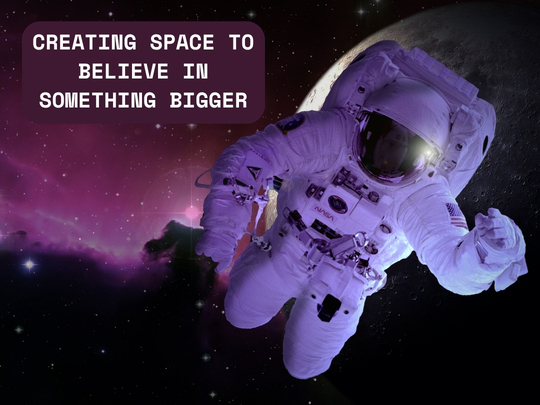
Last month I was enamoured by NASA’s Artemis II mission where four astronauts travelled to the far side of the moon, setting the distance record for going further than any human has gone before. Across nine days, I frequently found myself getting lost in the different elements of the expedition, embracing the science, technology, engineering and teamwork.
Yet, finding others that shared my buzz was difficult. In fact, most were largely indifferent and some were passionately dispassionate; wasting no time in informing me that assignments of this kind were not only expensive, but largely fake. Yes, they used the opportunity to fiercely fan conspiracy flames that the USA’s 1969 moon landing, pioneered by Neil Armstrong and Buzz Aldrin on Apollo 11, never occurred in the first place.
OK then. That’s me told.
I left these conversations knowing the only thing that’s certain is that the topic of space travel is highly divisive. I’ll stick to commenting on the weather next time.
But, I couldn’t shake the boldness of people’s remarks. My surprise led me to question why I was readily prepared to believe the story in front of me.
State of the nation
It’ll come as no surprise that the number of people who sometimes or often avoid the news is rocketing, sitting at 40% globally (according to an annual survey by Reuters) – up from 29% the year before. The UK sits above the global average at 46%, with people ‘worn out’ by the recurring war and conflict-based news agenda.
So, if our world is unstable, perhaps it’s logical to look to the stars for motivation.
The stars of this project came in the form of four special individuals: Reid Wiseman (commander); Victor Glover (pilot); Christina Koch (specialist); and Jeremy Hansen (specialist and first Canadian to travel to the moon). For me, at a time when society has learnt to celebrate celebrities without credentials, knowing that this team had endured years of technical training for a mission they couldn’t guarantee they’d return home from, was outstanding. They balanced this tension of excitement and fear consistently well, with trust, respect and kindness radiating towards each other in every interview they gave. Four bodies operating as one mind.
And, thanks to power of technology, I was able to watch them take off and land, while tracking their progress in-between. Even when I wasn’t plugged in, all I needed to do was look up to the sky for a pleasant existential reminder (a philosophical movement on the meaning of life) that we are abundantly richer thanks to their experience.
Believe in bigger
Growing up in a Christian household, what started as a warm and comforting way to connect with family, continued as an independent, meaningful relationship with God which still attempts to shape my purpose and behaviour – with an extra-strong caveat that there’s always room for improvement.
My faith is also something I share with my local church community. It’s strong social connections like this that helps continuously develop my mental and emotional health because when I waiver (I’m only human after all) there are others who I know and trust who can build me back up.
So, God is a firm part of my belief system contributing to my motivation and happiness.
What do you believe in?
Whether your beliefs are personal, cultural, social or spiritual, they have power to help us make sense of the world by triggering neurochemicals that the brain associates with ‘healing’, as cited in Psychology Today. That’s not to say the adopted purpose, routine and regulation surrounding our belief provides answers to all our questions, but it can be an emotional safety anchor in times of need.
Even a simple mindset shift is proven to change our physiology (e.g. studies show that if you reframe your existing manual work as exercise you could experience weight loss, reduced blood pressure and improved health metrics without changing your physical behaviour) and psychological wellbeing (e.g. individuals with strong, positive, beliefs experience higher levels of motivation, happiness and success). This isn’t wishful thinking; it’s science.
Create space to be surprised
So, having something to believe in, independent or shared, of global significance or of quiet importance, not only builds morale but is also considered to reduce stress and generate a sense of peace.
Yet, no matter what framework we subscribe to, we owe it to ourselves to frequently examine its relevance and suitability to avoid compromising our future growth.
Do our convictions still fit our frame, or do we need to expand or retract? If so, what implications will this have?
Unpacking your beliefs or lack of – often shaped by family and upbringing; education; culture; and even social media – is exactly the type of topic you might want to explore with a counsellor. Working with a trained professional to help you understand where your beliefs come from, and to what extent they align with your personal values, can help you assess any changes you might want to make to improve your outlook on life.
Artemis II gave me perspective. I knew what was going on and, at the same time, I had no idea how it was happening. Following their story was my ‘mini moment of release’ during a busy phase of life. By marvelling at their achievements, I could rationalise that although my exasperating concerns are valid, they don’t define me. My far side of the moon moment is yet to occur – and immersing myself in the lunar fly-by adventure has motivated me to keep going.
If you’re based in South West London and would like to talk to a counsellor about anger, fear or other emotions you may be feeling, contact The Fountain Therapy Trust for more details about our long-term, affordable counselling offer.
Donna White MBACP is an integrative counsellor at The Fountain Therapy Trust and runs a small private practice.